
The Best Garnish for a Gin and Tonic (and Why It Matters)
A gin and tonic lives or dies on its garnish. Get it right and the drink opens up, the botanicals lift, and the first sip smells like a summer evening before it even reaches your mouth. Get it wrong, or skip it, and you are left with something flat that could have been so much more.
Most people reach for a slice of lemon out of habit. There is nothing wrong with lemon, but a garnish is doing far more than adding a splash of colour, and once you understand what it actually does, you can start matching it to your gin rather than defaulting to whatever is in the fruit bowl.
What a garnish actually does to your drink
Aroma carries most of what we experience as flavour. When you drop a garnish into a gin and tonic, the oils in citrus peel, the compounds in fresh herbs, and the natural sugars in fruit all release into the glass and rise on the bubbles from the tonic. Your nose reads that lift a fraction of a second before you taste anything, and it sets the tone for the whole sip.
A good garnish does three things at once. It echoes the botanicals already in the gin so the drink feels complete rather than confused. It adds a fresh top note the spirit alone cannot give you. And it changes the texture of the experience, from the sharp snap of lime to the cool, clean length of cucumber.
The trick is to stop thinking of garnish as decoration and start thinking of it as the final botanical you add to the recipe.
Matching the garnish to the gin
The best garnish is the one that flatters what is already in the bottle. A quick guide to the classics and what they bring:
- Lemon suits crisp, juniper-forward London Dry styles, sharpening the citrus and keeping everything bright.
- Lime leans into zesty, contemporary gins and adds a green, slightly bitter edge that stands up well to a strong tonic.
- Cucumber softens floral and coastal gins, adding a cool, mineral freshness that lengthens the drink.
- Grapefruit lifts spicier, peppery gins and brings a rounded, slightly sweet bitterness.
- Fresh rosemary or basil works with herbaceous gins, releasing aromatic oils that fill the glass.
- Pink peppercorns flatter warm, spiced gins and add a gentle heat on the nose.
The rule underneath all of this is simple. Read the gin, then choose a garnish that agrees with it. A heavily floral gin drowned in grapefruit will fight itself. The same gin with a sprig of something green and a light citrus twist will sing.
Serve it in the right glass, at the right temperature
Two details finish the job. Use a large glass, a balloon or a tall highball, and fill it properly with ice. More ice sounds counterintuitive, but a glass packed with cubes melts slower and keeps the drink colder for longer, which protects the aromatics you worked to release. A mean scattering of ice waters the whole thing down within minutes.
Add the garnish last, and give citrus peel a gentle squeeze over the surface before you drop it in, so the oils spray across the top of the drink. That small step is the difference between a garnish you can see and a garnish you can smell.
The gin that turns garnish into theatre
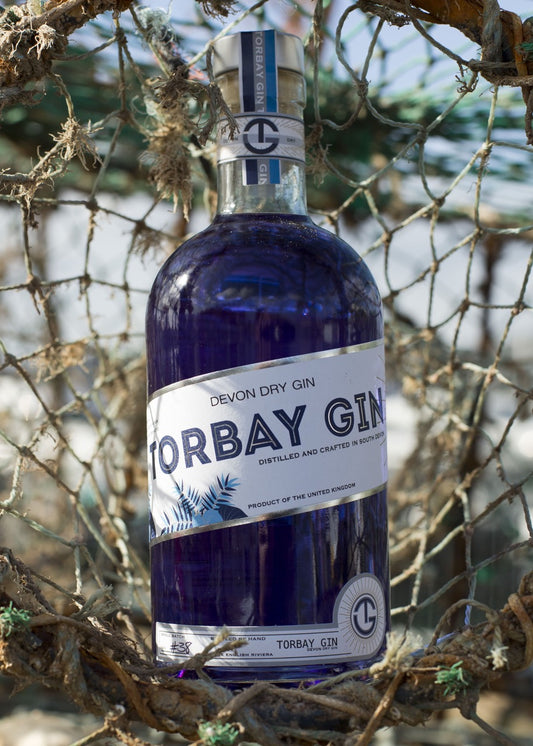
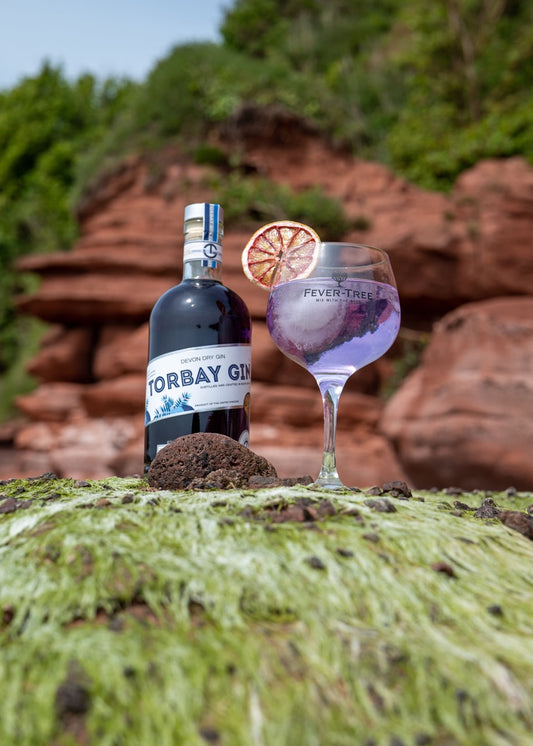
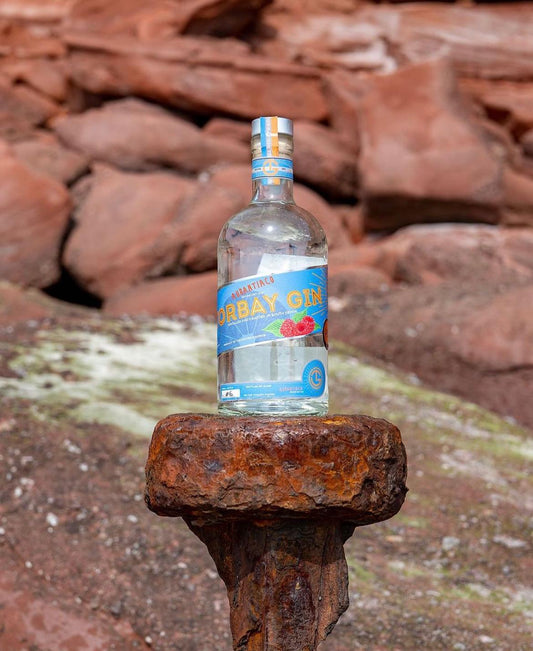
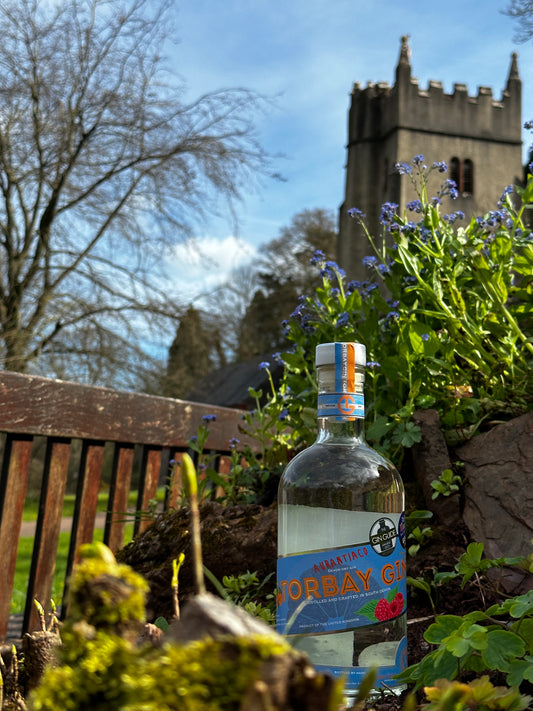
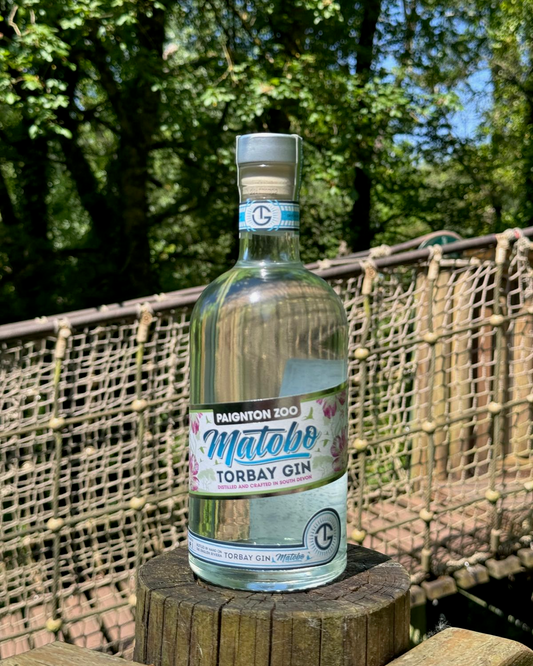
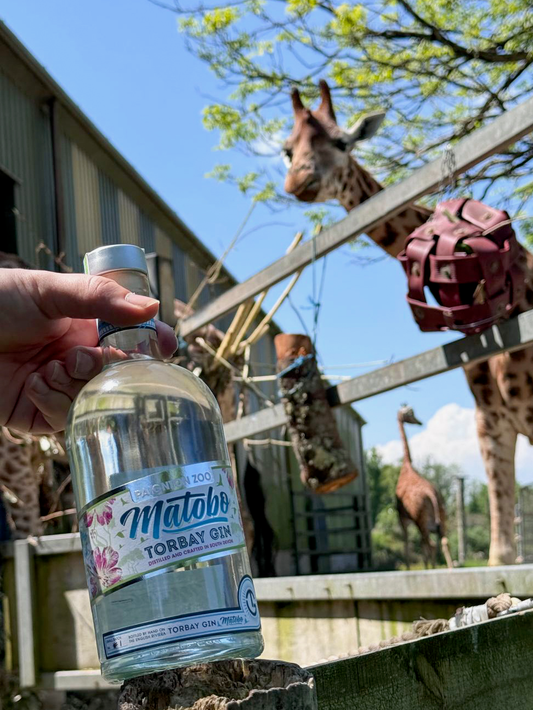
Here is where garnish becomes something more than flavour. Torbay Gin is made with butterfly pea flower, which gives the spirit a deep natural blue in the bottle. The moment you add tonic and a squeeze of citrus, the acidity shifts the colour through violet to a soft pink, right there in the glass.
That means the garnish is not only shaping the aroma and taste, it is driving a colour change your guests can watch happen. A wedge of lemon or lime is the trigger, so the humble citrus that finishes any good gin and tonic does double work in this one. Pour the tonic, squeeze the fruit, and the drink performs.
It is a proper party piece, and it happens to sit on top of a gin that has earned its stripes, with a Gold at the International Wine and Spirit Competition and a Taste of the West Gold to its name. Distilled in Cockington on the English Riviera, it was built to be poured slowly on a warm evening and enjoyed without any fuss. If you want the full science behind the colour, we broke it down in our guide to how Torbay Gin changes colour.
The short answer
The best garnish for a gin and tonic is the one that matches your gin's botanicals, sharpens its best notes, and finishes the drink with a fresh lift of aroma. For most gins that means citrus, herbs, or cucumber chosen with a little thought rather than habit. And if you want a garnish that also puts on a show, reach for a bottle that rewards the pour with a colour change, and let the citrus do the rest.